
How Flikt.AI Caught a $10,000 Structural / HVAC Clash That the Field Team Missed
A Mechanical / Structural plenum clash flagged pre-construction — missed in the field, resolved with a built-in interior soffit — confirmed by the GC.
Flikt.AI flagged the clash before construction. Shop-drawing review, the field team and the RFI log all missed it — and the only fix left was a permanent soffit that cost more than the review did.
The Challenge
A three-story single-family residence in South Florida was preparing for construction. The drawing set ran 63 sheets across Architectural, Structural, MEP, and Civil disciplines — signed, sealed, and out for bid. The structure was reinforced concrete slab construction with concrete beams of varying depth and 14′-0″ floor-to-floor heights at the first and second levels.
The General Contractor, Rose Remodeling and Construction, LLC, wanted to see whether Flikt.AI’s plan coordination pass would surface anything the design team and field reviewers had not.
What Flikt.AI Flagged
Flikt.AI’s pass produced an 11-item Plan Coordination Report — 8 High, 2 Medium, 1 Low severity. Finding C005, a High-severity Mechanical / Structural spatial clash in the first- and second-floor ceiling cavities, was the load-bearing one for this case study:
The mechanical plans (M-2, M-3) show supply and return ducts up to 26×10 and 20×8. The structural sections (S-4.0 through S-4.7) show 8″ concrete slabs with concrete beams of various depths dropping below the slab soffit. With beams encroaching on the plenum, the 10-inch-tall ducts must pass below or between concrete beams. No coordination sections are provided showing duct clearance relative to beam depths.
What Was Built On Site
The clash was not caught during shop drawing review, was not picked up in the field, and was not raised as an RFI. The duct ran. The beam was where the beam was always going to be. By the time the conflict became visible, the only resolution available was a field-built interior soffit to conceal the duct dropping below the structural beam soffit — a permanent reduction in finished ceiling height in the affected rooms, plus material, framing, drywall, finish, and re-inspection.
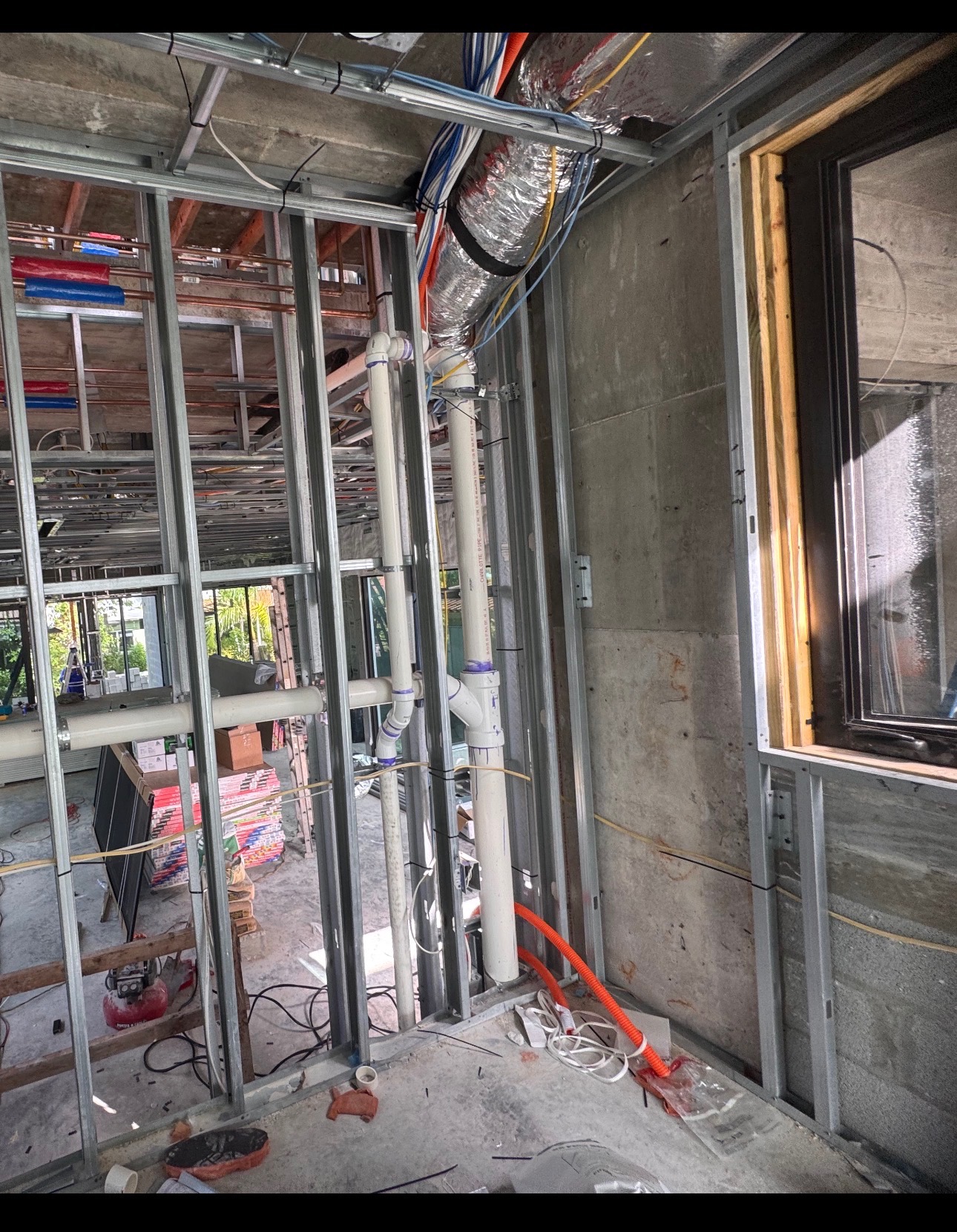
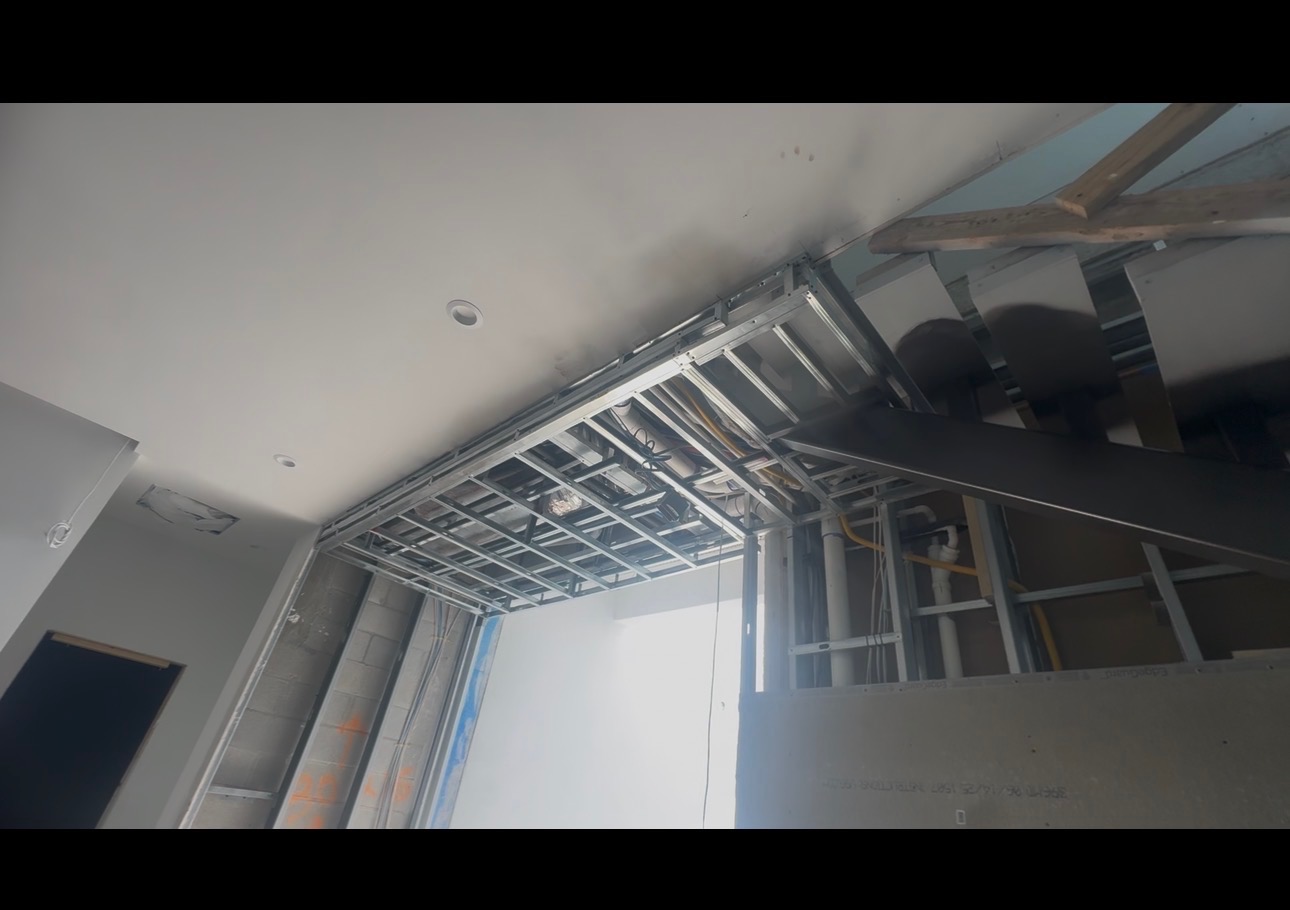
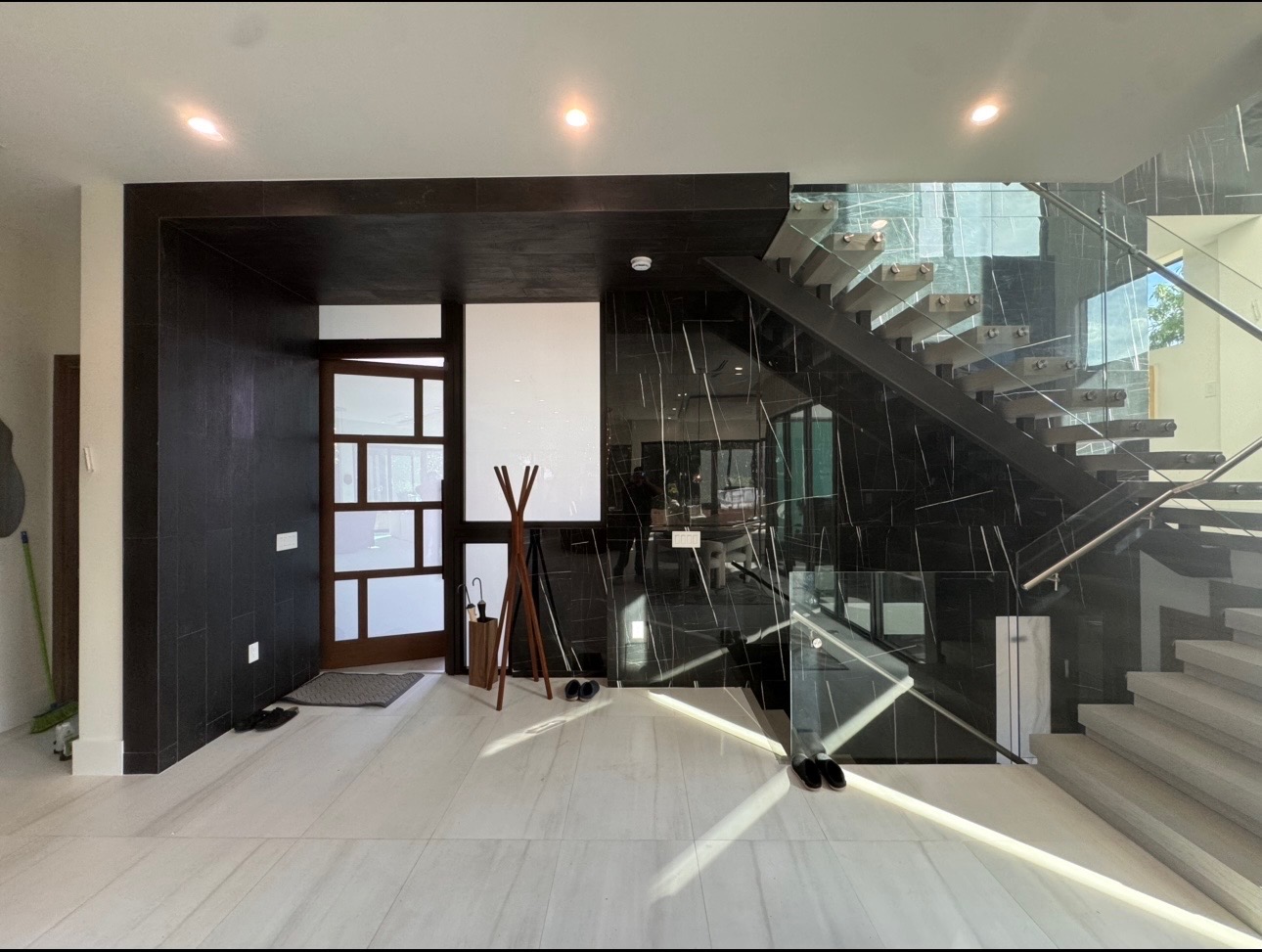
Field photos courtesy of Rose Remodeling and Construction, LLC.
The Cost
- Direct cost overrun: $10,000+ — squarely inside Flikt.AI’s pre-construction estimate of $8,831 – $20,831.
- Schedule impact: 2+ weeks of delay while the field resolution was designed, built, and finished.
- Permanent built condition: Lowered ceiling soffit that was not in the architectural set.
Why the Field Missed It
Three things make this kind of clash invisible to a manual review:
- It lives between disciplines. The mechanical sheets show duct size. The structural sheets show beam depth. The architectural sections show floor-to-floor heights. None of the three, looked at alone, shows the conflict — and there were no MEP coordination sections drawn.
- It’s a clearance problem, not a hard hit. Duct can pass through the plenum. It just can’t pass through the plenum and maintain the architect’s ceiling heights and clear the deepest beams.
- It survives sign-off because every individual sheet is correct. The mechanical engineer sized the duct correctly. The structural engineer sized the beams correctly. The architect dimensioned the section correctly. The coordination gap is in the white space between drawings.
Flikt.AI reads the white space. That’s the job.
GC Confirmation
Confirmed: the clash described above was caught by Flikt.AI pre-construction, was missed in the field, and was resolved with a built-in interior soffit at the cost and schedule impact stated.
Key Takeaway
Eleven coordination findings on a single residential set. One of them — C005 — was an HVAC-vs-structure clash that nobody in the chain (design, bid, or field) caught until the duct hit the beam.
The total flagged exposure on this one project ($64,552 – $147,517 across all 11 findings) exceeded the cost of a Flikt.AI review by more than an order of magnitude. The C005 clash alone paid for the pass several times over.
Want to see what Flikt.AI can find in your plans?
Submit Plans for a Quote Book a DemoAlready built the project? Send the bid-time set and its RFI log and check findings like these against what your team actually asked for in the field.
Note: Project address has been anonymized to South Florida to protect client confidentiality. Findings, sheet references, and cost estimates are from the actual Plan Coordination Report and have been confirmed by the project’s General Contractor.